

News
EPJ B Highlight - Novel materials: smart and magnetic
- Details
- Published on 10 February 2013
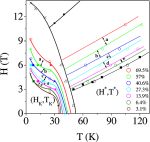
Varying magnetic fields and temperature conditions help to elucidate smart materials’ transitory magnetic disorder
Novel, smart materials like shape memory alloys very often display so-called glass-like magnetism. Other smart materials with similar properties include those which, when exposed to a magnetic field, change their electrical resistance, known as manganites, or change their temperature, known as magnetocaloric materials. Kaustav Mukherjee and his colleagues from the Consortium for Scientific Research Indore in India studied a key stage in the formation of such a magnetic glass material, called Pr0.5 Ca0.5 Mn0.975 Al0.025 O3, in a paper just published in EPJ B.
EPJ D has a new Editor in Chief for quantum optics and quantum information
- Details
- Published on 04 February 2013

From January 2013 Vladimir Bužek succeeds Claude Fabre as Editor in Chief of EPJ D with responsibility for papers in quantum optics, quantum information and related topics.
Prof. Dr. Bužek graduated from the Moscow State University (both MSc and PhD) in theoretical physics. His research interests are focused on quantum optics, quantum information sciences, quantum measurement theory and foundations of quantum mechanics. He has been the head of the Research Center for Quantum Information at the Slovak Academy of Sciences and holds a professorial position at the Faculty of Informatics of the Masaryk University in Brno, Czech Republic.
EPJ H Highlight - More than one brain behind E=mc2
- Details
- Published on 04 February 2013

A new study reveals the contribution of a little known Austrian physicist, Friedrich Hasenöhrl, to uncovering a precursor to Einstein famous equation
An American physicist outlines the role played by Austrian physicist Friedrich Hasenöhrl in establishing the proportionality between the energy (E) of a quantity of matter with its mass (m) in a cavity filled with radiation. In a paper just published in EPJ H, Stephen Boughn from Haverford College in Pensylvannia argues how Hasenöhrl’s work, for which he now receives little credit, may have contributed to the famous equation E=mc2.
EPJ E Highlight - Liquid crystal’s chaotic inner dynamics
- Details
- Published on 04 February 2013

Scientists have unearthed a new dynamic process induced by strong electric fields in thin liquid crystal cells
Liquid crystal displays are ubiquitous. Now, Polish physicists have demonstrated that the application of a very strong alternating electric field to thin liquid crystal cells leads to a new distinct dynamic effect in the response of the cells. The theory of spatio-temporal chaos explains this effect. It was elucidated by Wojciech Jeżewski and colleagues from the Institute of Molecular Physics, Polish Academy of Sciences, in Poznań, Poland, and was just published in EPJ E. This effect has implications for the operation of liquid-crystal devices because their operation is based on the electro-optic switching phenomenon, subject to the newly discovered effect.
EPJ D Highlight - Fusion helped by collision science
- Details
- Published on 15 January 2013
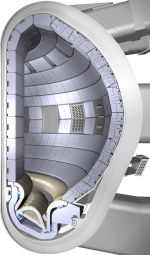
Understanding the mechanisms of electron-molecule collisions could help predict the operations inside the fusion chamber of the ITER reactor
An international team of physicists has calculated the efficiency of a reaction involving an incoming electron kicking out an electron from the metal beryllium (Be) or its hydrogen compound molecules, in an article just published in EPJ D. The efficiency, which partly depends on the electron’s incoming speed, is encapsulated in a quantity referred to as electron-impact ionisation cross sections (EICS). Electron-molecule interactions matter because they occur in a broad range of applications from the simplest like fluorescent lamps to the most complex, for example, in ionised matter found in plasmas such as latest generation screens, the outer space of the universe, and in fusion reactors.
EPJ A has a new Editor in Chief for experimental physics
- Details
- Published on 11 January 2013

From January 2013 Nicolas Alamanos succeeds Enzo De Sanctis as Editor in Chief of EPJ A for the experimental physics section.
Professor Alamanos is Deputy Director of the Institute of Research into the Fundamental Laws of the Universe (IRFU) and Research Director at CEA Saclay working in the domain of fundamental research in Nuclear Physics. During his long scientific career, he has served on many scientific and program advisory committees and has occupied different managerial positions. Most notably he has been president of GANIL’s scientific council and director of Saclay Nuclear Physics Division. He is a member or evaluator of many national committees – ARISTEIA (GRECE), FRS-FNRS (Belgium), ANR (France). He is currently a member of the GANIL/SPIRAL2 scientific council, of GANIL’s program advisory committee, and scientific counselor of the European program “CEA-Euro talents” in the domain of high energy physics and physics of the universe.
In addition to his various scientific and administrative duties, Professor Alamanos has always been very active editorially: beyond having been a member of the editorial board of EPJ A for many years, he is the Editor of the Scholarpedia Encyclopedia of Nuclear Physics.
EPJ D Highlight - May the force be with the atomic probe
- Details
- Published on 10 January 2013
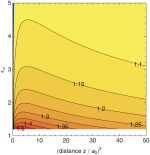
New models suggest devising means of probing a surface at a sub-micrometric level as this will help us understand how electrons’ diffusion affects long-range attractive forces
Theoretical physicist Elad Eizner from Ben Gurion University, Israel, and colleagues created models to study the attractive forces affecting atoms located at a wide range of distances from a surface, in the hundreds of nanometers range. Their results, just published in EPJ D, show that these forces depend on electron diffusion, regardless of whether the surface is conducting or not. Ultimately, these findings could contribute to designing minimally invasive surface probes.
EPJ B Highlight - Silver Sheds Light On Superconductor Secrets
- Details
- Published on 10 January 2013

By doping a bismuth-based layered material with silver, Chinese scientists demonstrated that superconductivity is intrinsic to the new material rather than stemming from its impurities
The first report on the chemical substitution, or doping, using silver atoms, for a new class of superconductor that was only discovered this year, has just been published in EPJ B. Chinese scientists from Institute of Solid State Physics, Chinese Academy of Sciences, Hefei, discovered that the superconductivity is intrinsic rather than created by impurities in this material with a sandwich-style layered structure made of bismuth oxysulphide (Bi4O4S3).
EPJ E Highlight - Adhesion disturbed by noise
- Details
- Published on 20 December 2012

A new model could ultimately help robotic fingers, made of a soft surface, manipulate small objects
Imagine a solid ball rolling down a slightly inclined ramp. What could be perceived as child’s play is the focus of serious theoretical research by Manoj Chaudhury and Partho Goohpattader, two physicists from Lehigh University, Bethlehem, Pensylvania, USA. Their study, which has just been published in EPJ E, has one thing in common with childhood behaviour. It introduces a mischievous idea, namely studying the effect of random noise, such as vibrations, on the ball. They found it could lower the energy barrier to set the ball in motion.
EPJ Data Science Highlight - Tracking gene flow in marine plant evolution
- Details
- Published on 20 December 2012

Physicists and biologists apply Big Data statistical tools to study marine plant evolution
A new method that could give a deeper insight into evolutional biology by tracing directionality in gene migration has just appeared in EPJ Data Science. Paolo Masucci from the Centre for Advanced Spatial Analysis, at University College of London, UK, and colleagues identified the segregation of genes that a marine plant underwent during its evolution. They found that the exchange of genes, or gene flow, between populations of a marine plant went westward from the Mediterranean to the Atlantic. This methodology could also be used to estimate the information flow in complex networks, including other biological or social networks.


