

EPJ B Highlight - Inter-dependent networks stress test
- Details
- Published on 31 July 2014
A new study relies on a complex systems modelling approach, known as graph theory, to analyze inter-dependent physical or social networks and improve their reliability in the event of failure
Energy production systems are good examples of complex systems. Their infrastructure equipment requires ancillary sub-systems structured like a network - including water for cooling, transport to supply fuel, and ICT systems for control and management. Every step in the network chain is interconnected with a wider network and they are all mutually dependent. A team of UK-based scientists has studied various aspects of inter-network dependencies, not previously explored. The findings have been published in EPJ B by Gaihua Fu from Newcastle University, UK, and colleagues. These findings could have implications for maximising the reliability of such networks when facing natural and man-made hazards.
EPJ B Highlight - Unleashing the power of quantum dot triplets
- Details
- Published on 08 July 2014

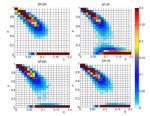
Another step towards faster computers relies on three coherently coupled quantum dots used as quantum information units, which could ultimately enhance quantum computers’ speed
Quantum computers have yet to materialise. Yet, scientists are making progress in devising suitable means of making such computers faster. One such approach relies on quantum dots—a kind of artificial atom, easily controlled by applying an electric field. A new study demonstrates that changing the coupling of three coherently coupled quantum dots (TQDs) with electrical impulses can help better control them. This has implications, for example, should TQDs be used as quantum information units, which would produce faster quantum computers due to the fact that they would be operated through electrical impulses. These findings have been published in EPJ B by Sahib Babaee Tooski and colleagues affiliated with both the Institute of Molecular Physics at the Polish Academy of Sciences, in Poznan, Poland, the University of Ljubljana and the Jožef Stefan Institute in Slovenia.
EPJ B Colloquium - Next generation interatomic potentials for condensed matter systems
- Details
- Published on 08 July 2014

More efficient computational methods are urgently needed to capture condensed matter systems in simulations. Electronic structure methods, such as density-functional theory (DFT), usually provide a good compromise between accuracy and efficiency, but they demand much computational power. For this reason, they are only applicable to small systems containing a few hundred atoms at most. Conversely, many interesting phenomena involve much larger systems comprising thousands of atoms or more. Considerable effort has been invested in the development of potentials that enable simulations to run on larger system and for longer times. Typically these potentials are based on physically-motivated functional forms. Therefore, while they perform very well for the specific applications for which they have been designed, they cannot easily be transferred from one system to another. Moreover, their numerical accuracy is restricted by the intrinsic limitations of the imposed functional forms. In this EPJ B Colloquium, Handley and Behler survey several novel types of potentials emerged in recent years, which are not based on physical considerations.
EPJ B Highlight - Ti-V alloys’ superconductivity: inherent, not accidental
- Details
- Published on 12 June 2014

All of the Ti-V alloys could display a relatively high superconducting transition temperature, as it is their unusual physical properties that influence this property, unlike previously thought
Physicists from India have shed new light on a long-unanswered question related to superconductivity in so-called transition metal binary alloys. The team revealed that the local magnetic fluctuations, or spin fluctuations, an intrinsic property of Titanium-Vanadium (Ti-V) alloys, influences superconductivity in a way that is more widespread than previously thought. They found that it is the competition between these local magnetic fluctuations and the interaction between electrons and collective excitations, referred to as phonons, which determine the superconductivity. Dr. Matin, from the Raja Ramanna Center for Advanced Technology, Indore, India, and colleagues published their findings in a study in EPJ B
EPJ B Highlight - Market crashes are anomalous features in the financial data fractal landscape
- Details
- Published on 07 June 2014

Analysing the adequation of financial data structure with its expected fractal scaling could help early detection of extreme financial events because these represent a scaling irregularity
Due to their previously discovered fractal nature, financial data patterns are self-similar when scaling up. New research shows that the most extreme events in financial data dynamics—reflected in very large price moves—are incompatible with multi-fractal scaling. These findings have been published in EPJ B by physicist Elena Green from the National University of Ireland, Maynooth, Ireland and colleagues. Understanding the multi-fractal structure of financially sound markets could, ultimately, help in identifying structural signs of impending extreme events.
EPJ B Highlight - Particles near absolute zero do not break the laws of physics after all
- Details
- Published on 07 May 2014

A change of models demystifies anomalous particle behaviour at very low temperatures, confirming that the third law of thermodynamics cannot be violated
In theory, the laws of physics are absolute. However, when it comes to the laws of thermodynamics—the science that studies how heat and temperature relate to energy—there are times where they no longer seem to apply. In a paper recently published in EPJ B, Robert Adamietz from the University of Augsburg, Germany, and colleagues have demonstrated that a theoretical model of the environment’s influence on a particle does not violate the third law of thermodynamics, despite appearances to the contrary. These findings are relevant for systems at the micro or nanometer scale that are difficult to decouple from the heat or the quantum effects exerted by their environment.
EPJ B Highlight - Nanoscale heat flow predictions
- Details
- Published on 22 April 2014

A new study predicts that heat flow in novel nanomaterials could contribute to creating environmentally friendly and cost-effective nanometric-scale energy devices
Physicists are now designing novel materials with physical properties tailored to meet specific energy consumption needs. Before these so-called materials-by-design can be applied, it is essential to understand their characteristics, such as heat flow. Now, a team of Italian physicists has developed a predictive theoretical model for heat flux in these materials, using atom-scale calculations. These findings, published in EPJ B by Claudio Melis and colleagues from the University of Cagliary, Italy, could have implications for optimising the thermal budget of nanoelectronic devices—which means they could help dissipate the total amount of thermal energy generated by electron currents—or in the production of energy through thermoelectric effects in novel nanomaterials.
EPJ B Highlight - Grasp of SQUIDs dynamics facilitates eavesdropping
- Details
- Published on 08 April 2014

Latest theoretical advances pertaining to the dynamics of highly sensitive magnetometers could find military applications in low-noise amplifiers and sensitive antennas
Theoretical physicists are currently exploring the dynamics of a very unusual kind of device called a SQUID. This Superconducting Quantum Interference Device is a highly sensitive magnetometer used to measure extremely subtle magnetic fields. It is made of two thin regions of insulating material that separate two superconductors – referred to as Josephson junctions – placed in parallel into a ring of superconducting material. In a study published in EPJ B, US scientists have focused on finding an analytical approximation to the theoretical equations that govern the dynamics of an array of SQUIDs. This work was performed by Susan Berggren from the US Navy research lab, SPAWAR Systems Center Pacific, in San Diego, CA, USA and Antonio Palacios San Diego State University. Its applications are mainly in the military sector, including SQUID array-based low-noise amplifiers and antennas.
EPJ B Highlight - Graphene nanoribbons as electronic switches
- Details
- Published on 31 March 2014

A new theoretical study shows the conductivity conditions under which graphene nanoribbons can become switches in externally controlled electronic devices
One of graphene’s most sought after properties is its high conductivity. Argentinian and Brazilian physicists have now successfully calculated the conditions of the transport, or conductance mechanisms, in graphene nanoribbons. The results, recently published in a paper in EPJ B, yield a clearer theoretical understanding of conductivity in graphene samples of finite size, which have applications in externally controlled electronic devices.
EPJB Colloquium – From SiC to fluorescent SiC based white LEDs
- Details
- Published on 11 March 2014

A new EPJ B Colloquium reviews the latest advances in silicon carbide (SiC) for optoelectronics. The wide bandgap of SiC makes it a great semiconductor material to make devices for in high power, high frequency and high temperature applications.
During the past decade, SiC has also become a promising materials for light-emitting diodes (LED), since it was found that co-doping it with nitrogen and boron produces a high donor-acceptor pair emission efficiency. Fluorescent SiC based white LED light source is an innovative concept for optoelectronic devices.


