

EPJ B Highlight - Physicists decipher social cohesion issues
- Details
- Published on 10 April 2013

Studying the effect of migration on cooperation could help to better understand social cohesion
Migrations happen for a reason, not randomly. A new study, based on computer simulation, attempts to explain the effect of so-called directional migration – migration for a reason – on cooperative behaviours and social cohesion. These results appear in a study just published in EPJ B by Hongyan Cheng from Beijing University of Posts and Telecommunications and colleagues.
EPJ B Colloquium - Why heavy doping makes ultrafast plasmonic semiconductors
- Details
- Published on 02 April 2013
This EPJB Colloquium reviews the pioneering studies of plasmon resonance in heavily doped semiconductor thin films. It also reports the chemical synthesis and structural properties of heavily doped semiconductor nanocrystals. Their linear plasmonic response (under excitation with weak continuous-wave optical fields) is illustrated both theoretically and experimentally. Finally, the authors review the most recent results on the transient (i.e. nonlinear) ultrafast plasmonic features exhibited by chalcogenide nanocrystals under excitation with ultra-fast optical pulses, including a “gold-like” theoretical model. This model turns out to provide sufficient insights into the first experiments on heavily-doped plasmonic nanoparticles.
Plasmonics in heavily-doped semiconductor nanocrystals. Francesco Scotognella et al., Eur. Phys. J. B (2013) 86: 154, DOI: 10.1140/epjb/e2013-40039-x
EPJ B Highlight - Swarm intelligence
- Details
- Published on 27 March 2013

A new study of animal swarms uncovers some new features of their collective behaviour when overcrowding sets in
Swarming is the spontaneous organised motion of a large number of individuals. It is observed at all scales, from bacterial colonies, slime moulds and groups of insects to shoals of fish, flocks of birds and animal herds. Now physicists Maksym Romenskyy and Vladimir Lobaskin from University College Dublin, Ireland, have uncovered new collective properties of swarm dynamics in a study just published in EPJ B. Ultimately, this could be used to control swarms of animals, robots, or human crowds by applying signals capable of emulating the underlying interaction of individuals within the swarm, which could lead to predicted motion patterns elucidated through modelling.
EPJ B Highlight - Unlocking fuel cell conductivity
- Details
- Published on 17 March 2013

Work on a high-conductivity material demonstrates the role of oxygen ions in enhancing their capabilities
Yttria stabilized zirconia, also known as YSZ, is a material of great interest because of its relatively high oxygen-ion based conductivity. In particular, it finds applications in electrochemical devices, such as solid oxide fuel cells and oxygen sensors. In a study published in EPJ B, Kia Ngai, from the University of Pisa in Italy, and colleagues from the Complutense University in Madrid, Spain, devised a model of the oxygen-ion dynamics that contribute to the conductivity of YSZ.
EPJ B Highlight - Spotting the invisible cracks in wind turbines
- Details
- Published on 23 February 2013

A new approach is available for real-time monitoring of the structural health of wind turbine components during exposure to turbulences.
Physicists have now developed a new method for analysing the elastic characteristics of mechanical structures subjected to disturbances, akin to the turbulences affecting wind turbines. These results have just been published in EPJ B by Philip Rinn and his colleagues at the ForWind Center for Wind Energy Research at the University of Oldenburg, Germany.
A significant percentage of the costs of wind energy is due to wind turbine failures, as components are weakened under turbulent air flow conditions and need to be replaced. The challenge for the team was to find a method for detecting fatigue in the wind turbines’ parts without having to remove each of the components and while the turbine is in operation.
EPJ B Highlight - Novel materials: smart and magnetic
- Details
- Published on 10 February 2013
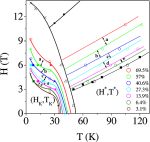
Varying magnetic fields and temperature conditions help to elucidate smart materials’ transitory magnetic disorder
Novel, smart materials like shape memory alloys very often display so-called glass-like magnetism. Other smart materials with similar properties include those which, when exposed to a magnetic field, change their electrical resistance, known as manganites, or change their temperature, known as magnetocaloric materials. Kaustav Mukherjee and his colleagues from the Consortium for Scientific Research Indore in India studied a key stage in the formation of such a magnetic glass material, called Pr0.5 Ca0.5 Mn0.975 Al0.025 O3, in a paper just published in EPJ B.
EPJ B Highlight - Silver Sheds Light On Superconductor Secrets
- Details
- Published on 10 January 2013

By doping a bismuth-based layered material with silver, Chinese scientists demonstrated that superconductivity is intrinsic to the new material rather than stemming from its impurities
The first report on the chemical substitution, or doping, using silver atoms, for a new class of superconductor that was only discovered this year, has just been published in EPJ B. Chinese scientists from Institute of Solid State Physics, Chinese Academy of Sciences, Hefei, discovered that the superconductivity is intrinsic rather than created by impurities in this material with a sandwich-style layered structure made of bismuth oxysulphide (Bi4O4S3).
EPJ B Highlight - Persistent sync for neurons
- Details
- Published on 03 November 2012
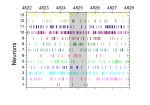
Under the scrutiny of mathematical tools designed to study complex networks, rats’ neurons reveal steady neural network coordination regardless of the animals’ behaviour
A team of Brazilian physicists working with neuroscientists studying freely behaving rats have found that their neurons often act in precise coordination over time, in a study just published in EPJ B. These findings stem from the work of Bruno Silva, a researcher at Bahia Federal University in Salvador, and his colleagues from other universities in the Northeastern region of Brazil, and suggest that neuronal networks’ memory could be explored in the future.
EPJ B Highlight - Graphene mini-lab
- Details
- Published on 03 November 2012
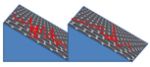
Physicists study fast-moving electrons in graphene as a model laboratory for massless particles
A team of physicists from Europe and South Africa showed that electrons moving randomly in graphene can mimic the dynamics of particles such as cosmic rays, despite travelling at a fraction of their speed, in a paper just published in EPJ B.
Andrey Pototsky and colleagues made use of their knowledge of graphene, which is made of a carbon layer, one atom thick, and packed in a honeycomb lattice pattern. In such material the interaction of electrons with atoms changes the effective mass of the electrons. As a result, the energy of electrons in graphene becomes similar to the photon energy.
EPJ B Highlight - Cocktail achieves superconducting boost
- Details
- Published on 31 October 2012
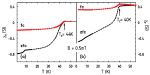
Scientists have now developed a high-performance material by mixing iron and selenium
Physicists describe how they have synthesized a new material that belongs to the iron-selenide class of superconductors, called LixFe2Se2(NH3)y, in a paper just published in EPJ B. The work was carried out by Ernst-Wilhelm Scheidt from the University of Augsburg and colleagues. This material displays promising superconducting transition temperatures of 44 Kelvins (K) at ambient pressure, thus improving upon traditional copper-based high-temperature superconductors.


