EPJ B Highlight - Revisiting quantum effects in MEMS
- Details
- Published on 12 November 2013

New calculations shows that the influence of quantum effects on the operating conditions of nanodevices has, until now, been overestimated
Micro- and nano-electromechanical devices, referred to as MEMS and NEMS, are ubiquitous. These nanoscale machines with movable parts are used, for example, to trigger cars’ airbags following a shock. They can also be found in smartphones, allowing them to detect how to adequately display the screen for the viewer. The trouble is that, as their size decreases, forces typically experienced at the quantum level start to matter in these nanodevices. Mexican physicists have studied the mechanical and electrical stability of MEMS and NEMS, depending on the plate thickness and the nature of the material used. The results have now been published in EPJ B by Raul Esquivel-Sirvent and Rafael Perez-Pascual from the National Autonomous University of Mexico, in Mexico City.
EPJ B Highlight - Numerical validation of quantum magnetic ordering
- Details
- Published on 16 October 2013

Numerical simulations designed to confirm the magnetic characteristics of 3D quantum materials largely match the theoretical predictions
A new study set out to use numerical simulations to validate previous theoretical predictions describing materials exhibiting so-called antiferromagneting characteristics. A recently discovered theory shows that the ordering temperature depends on two factors—namely the spin-wave velocity and the staggered magnetisation. The results, largely consistent with these theoretical predictions, have now been published in a paper in EPJ B by Ming-Tso Kao and Fu-Jiun Jiang from the National Taiwan Normal University, in Taipei.
EPJ B Colloquium - Conjugated polymer-wrapped carbon nanotubes: physical properties and device applications
- Details
- Published on 27 September 2013

This EPJ B Colloquium presents an overview of the preparation method and physical properties of a new hybrid system consisting of single-walled carbon nanotubes (SWNTs) wrapped in conjugated polymers. The technique, which was first demonstrated in 2007, has attracted great interest owing to the high purity of the resulting semiconducting SWNTs and the possibility of applying them in electronic devices. Here, the authors review recent progress in the preparation of these nano-hybrids, their photophysical properties, and their applications in field-effect transistors and photovoltaic devices.
EPJ B Highlight - Green photon beams more agile than optical tweezers
- Details
- Published on 17 September 2013

A new manipulation tool exploits the fact that when light interacts with matter, it creates a force that produces material properties in macromolecules and biological cells
Romanian scientists have discovered a novel approach for the optical manipulation of macromolecules and biological cells. Their findings stem from challenging the idea that visible light would induce no physical effect on them since it is not absorbed. Instead, Sorin Comorosan, working as physicist at the National Institute for Physics and Nuclear Engineering based in Magurele, Romania, and as a biologist at the Fundeni Clinical Institute, Bucharest, Romania, and colleagues had the idea to use green photon beams. With them, it is possible to perform optical manipulation of macrostructures, such as biological proteins, with greater precision than with optical tweezers made from focused laser beams.
EPJ B Highlight - Atom-based analogues to electronic devices
- Details
- Published on 06 September 2013
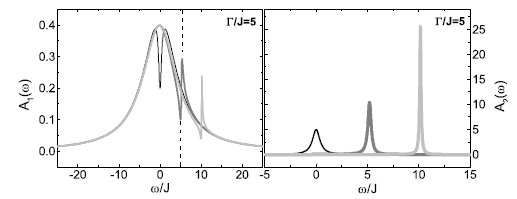
New research gives a theoretical explanation as to how transport of single atoms is made possible through a chain of quantum dots
Scientists have pushed back the boundaries of atom-based transport, creating a current by charac-terising the many-body effects in the transport of the atoms along a periodic lattice. This work by Anton Ivanov and colleagues from the Institute for Theoretical Physics, at the University of Heidel-berg, Germany, adopted a new analytical approach before comparing it to approximate numerical simulations, and is reported in a paper recently published in EPJ B.
EPJ B Highlight - Studying emotions causing opinions to change
- Details
- Published on 30 July 2013
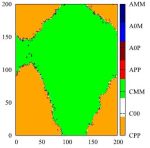
Physicists can use their tools to help understand how, in real life, opinions form and change by modelling the complex interactions between information and emotion
Social phenomena fascinate with their complexity, but are not easily understood. Pawel Sobkowicz, an independent researcher based in Warsaw, Poland, has developed a model to study the dynamic of standard people, called ‘agents’, and their response to a given piece of information, depending on their emotional state. In a study just published in EPJ B, the author shows that opinion dynamics differ depending on whether the agent is agitated or not.
EPJ B Highlight - When diffusion depends on chronology
- Details
- Published on 18 July 2013

© Highways Agency
Study shows that the order of events taking place in complex networks may dramatically alter the way diffusion occurs
The Internet, motorways and other transport systems, and many social and biological systems are composed of nodes connected by edges. They can therefore be represented as networks. Scientists studying diffusion over such networks over time have now identified the temporal characteristics that affect their diffusion pathways. In a paper just published in EPJ B, Renaud Lambiotte and Lionel Tabourier from the University of Namur, Belgium, together with Jean-Charles Delvenne from the Catholic University of Louvain, Belgium, show that one key factor that can dramatically change a diffusion process is the order in which events take place in complex networks.
EPJ B Highlight - Semantics on the basis of words’ connectivity
- Details
- Published on 08 July 2013

It is now possible to identify the meaning of words with multiple meanings, without using their semantic context
Two Brazilian physicists have now devised a method to automatically elucidate the meaning of words with several senses, based solely on their patterns of connectivity with nearby words in a given sentence – and not on semantics. Thiago Silva and Diego Amancio from the University of São Paulo, Brazil, reveal, in a paper just published in EPJ B, how they modelled classics texts as complex networks in order to derive their meaning. This type of model plays a key role in several natural processing language tasks such as machine translation, information retrieval, content analysis and text processing.EPJ B Highlight - Averting worse economic collapses
- Details
- Published on 01 July 2013

A new study shows how specific parameters can help us steer clear of tipping points in dynamic systems, such as entire economies.
By managing macro-economic parameters, scientists believe that—unlike previously thought—it is possible to steer an economy around irreversible changes in its complex dynamics and avert potential economic disasters. These findings, just published in EPJ B, stem from the theoretical work of Michael Harré and colleagues at the Complex Systems Group at the University of Sydney, Australia.
EPJ B Highlight - Predicting collective online behaviour
- Details
- Published on 18 June 2013

A team of Chinese scientists evaluates the impact of a website based on the interaction between its users with the entire Web
A new study shows that small websites, in terms of daily user flux based on number of clicks, have a disproportionally high impact when it comes to traffic generation and influence compared to larger websites. These findings, just published in EPJ B, have implications for estimating the value of sites and related advertising revenue. They result from the work of Lingfei Wu from the City University of Hong Kong and Jiang Zhang from the School of Management, at Beijing Normal University, China.